
Choose torque sensing if you want motor assistance to respond to how hard you pedal. Choose cadence-based assistance if your priority is getting useful help while pedaling lightly. For commuters, the difference matters most when starting, adjusting speed and riding home tired. Neither label guarantees a comfortable bike: assist settings and the complete drive system also matter.
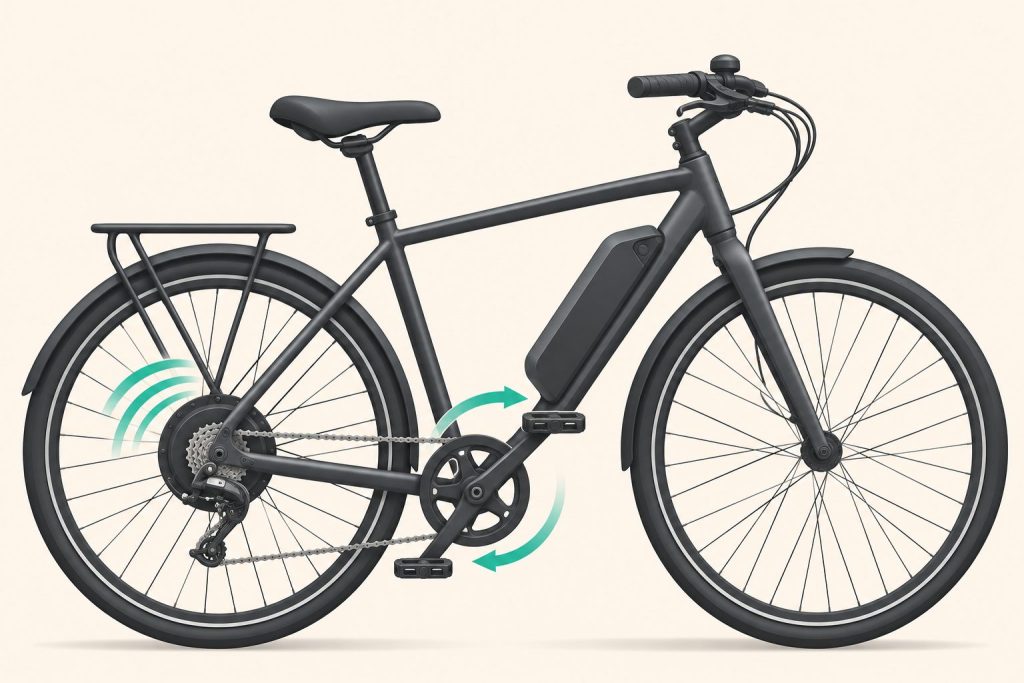
This guide focuses on pedal-assist commuter bikes sold in the United States. The mechanical distinction applies elsewhere, but specifications and available modes can differ by market. It compares manufacturer documentation, rather than reporting hands-on testing.
What each sensor tells the motor
A cadence sensor detects crank rotation; cadence means how quickly you turn the pedals. A torque sensor measures the twisting effort you apply through the pedals. In a torque-responsive system, harder pedaling generally requests more motor assistance, within the system’s limits.
Aventon’s sensor comparison describes cadence assistance as less dependent on rider effort and torque assistance as responsive to that effort. However, do not assume every cadence bike delivers progressively more power whenever you pedal faster. The control system determines what happens after rotation is detected.
The categories also overlap. Tern explains that its Bosch system combines torque, cadence and speed measurements. A bike described as torque sensing may therefore use cadence information too. For the underlying terminology, see our introduction to pedal assist.
What changes during the commute?
Starting from traffic lights
Torque-responsive assistance can make a stronger pedal push produce a corresponding increase in help. Cadence systems need to detect rotation before responding. The practical question is how much movement and effort the particular bike needs before assistance arrives.
On a demonstration ride, make several ordinary starts in a quiet area. Notice both the initial effort and whether power arrives progressively or more abruptly than you want. Repeat in a lower assist setting. Do not accept a claim that every torque bike starts instantly or every cadence bike has an awkward delay.
Riding slowly and matching another cyclist
If you like adjusting assistance through your feet, torque sensing is a sensible starting point for your shortlist. Easing your pedal effort can reduce the request for help, making that relationship useful when your desired pace keeps changing.
With cadence-based assistance, pay particular attention to the lowest powered setting. Can you pedal comfortably at a modest pace, or does the bike keep encouraging you toward a faster speed? A pleasant cruising setting may still be too assertive for your slowest section.
Hills and loaded panniers
A torque sensor is an input device, not a promise of climbing strength. Compare the complete bike with the loads and gradients you expect. Do not confuse a torque sensor with an advertised motor torque rating: one detects rider input; the other describes motor output.
Gazelle’s explanation emphasizes using the gears, including selecting an easier gear before stopping on a derailleur bike. Assistance does not remove the need to choose a manageable starting gear.
For a hypothetical commute with a hill immediately outside the office, ask to try a comparable incline. Judge whether you can start and sustain a comfortable effort. A flat parking-lot demonstration leaves that question unanswered.
Arriving without overworking your legs
Cadence-based assistance deserves consideration if you want to keep the pedals moving without pushing hard throughout the journey. Torque-responsive systems tie assistance more closely to effort, although the selected support level changes how demanding that feels.
Gazelle identifies consistent rider effort as a consideration for torque sensing. Try the bike at the effort you could sustain on a tired evening, rather than judging it only while fresh. If low pedal force is essential, make that an explicit requirement when arranging a demonstration.
Does torque sensing guarantee better range?
Do not budget your commute around a sensor-based range bonus. Aventon advertises efficiency advantages for torque sensing, but its comparison does not establish a universal mileage improvement under matched commuting conditions.
For a purchase decision, ask what conditions produced the bike’s advertised range: assist setting, rider load, terrain and speed. Treat an unexplained maximum as an advertised figure, not a measured result for your route. This article makes no numerical range claim for either sensor type.
A short test-ride checklist
- Start repeatedly: compare the effort before assistance and the way power arrives.
- Ride at your slowest useful pace: check whether the lowest assist setting feels manageable.
- Try a representative hill: use the gears and an effort you could sustain after work.
- Change pedal pressure: notice how clearly assistance follows your input.
- Ask about the exact configuration: confirm the sensor system, available modes and any required software version for the bike being supplied.
For two hypothetical buyers, the priorities differ: someone negotiating frequent stops may value a close relationship between pedal pressure and assistance; someone with a steady, mostly level journey may prefer substantial help with light pedaling. Use those priorities to choose what to try first, then let the complete bike’s behavior decide.
Once you have a shortlist, use our commuting guide to consider route planning and everyday preparation alongside the sensor choice.
Research-based editorial guide. Prepared with AI assistance and source checks; no hands-on product testing is claimed.

